By Ridah Kering Chebet
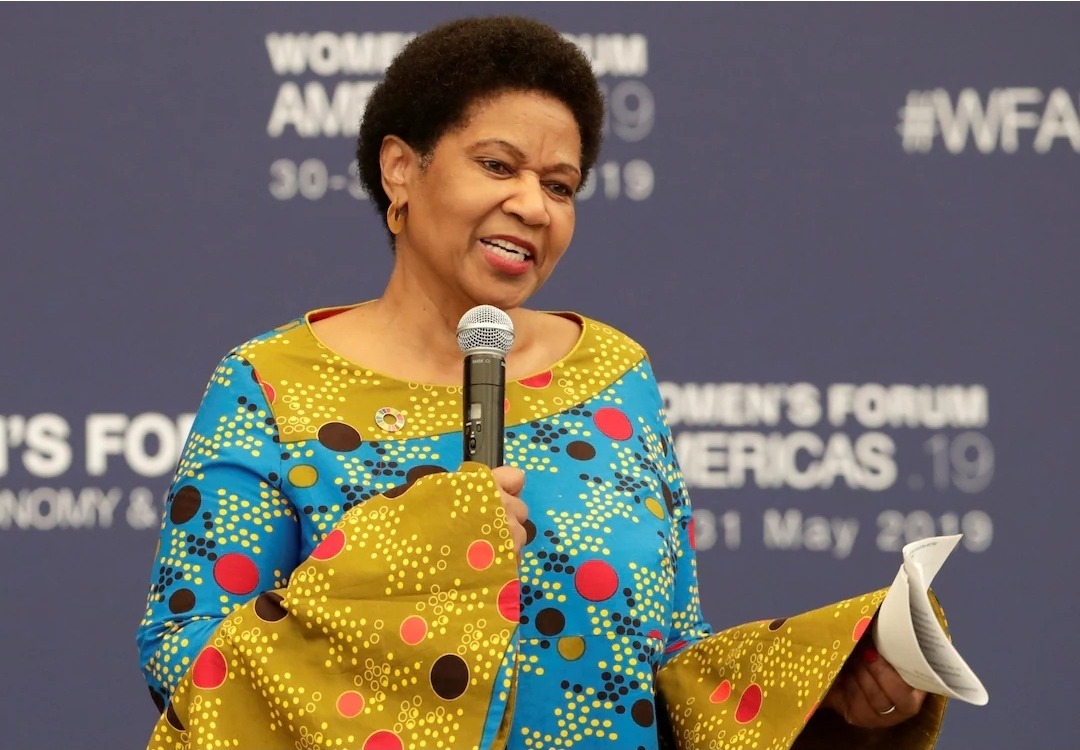
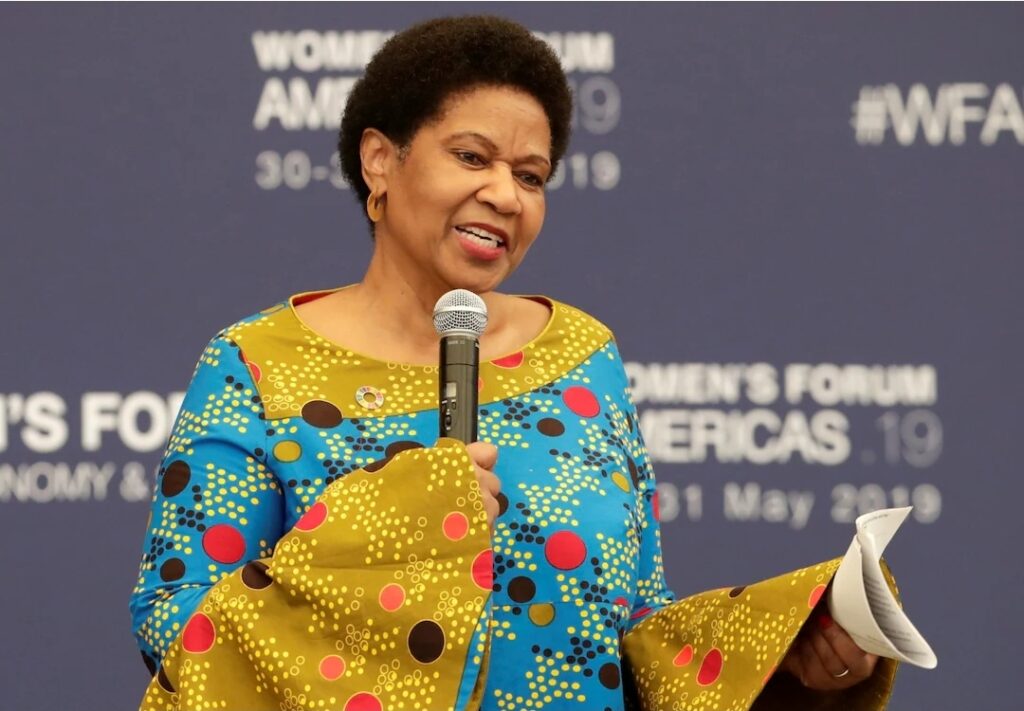
The news arrived on a quiet Friday evening and spread with the weight of history. On 20 November 2026, Phumzile Mlambo-Ngcuka, South Africa’s first woman Deputy President and one of the most consequential global champions of gender equality, died at the age of 71. Complications from a medical procedure she had undergone roughly two weeks earlier claimed her life. In the hours that followed, a nation that had watched her break barriers at home and then take the fight for women’s rights to the world paused, and then began to speak her name with both sorrow and pride.
She was born on 3 November 1955 in Clermont, outside Durban, into a Zulu household where education was not a distant ideal but the daily atmosphere of the kitchen. Her father, Michael, was a teacher; her mother, Sabbath, a community health nurse who ran literacy classes for adults from the family home. From the age of about eleven, young Phumzile helped. She watched grown men and women discover they could write their own names, count their own money, and begin to manage their own lives. That image never left her. It became the seed of a life spent insisting that knowledge and opportunity should not be rationed by race or gender.
Apartheid tried to limit her. After the Soweto uprising of 1976 she was barred from studying in South Africa. She crossed into Lesotho and earned a Bachelor’s degree in social science and education from the National University of Lesotho in 1980.
She taught, first at a teachers’ training college and then at Ohlange High School in Inanda — the same school where Nelson Mandela would later cast his first democratic vote. She became the founding president of the Natal Organisation of Women, a vital structure of the United Democratic Front. The security police watched her. Still she organised.
In the mid-1980s she moved to Geneva to work with the World Young Women’s Christian Association, building programmes for young women across Africa, Asia and the Middle East. She returned home to lead development work in Cape Town’s informal settlements, then founded her own consulting firm as the country edged toward freedom. When the first democratic Parliament sat in 1994, she was there. She rose quickly: Deputy Minister of Trade and Industry, then Minister of Minerals and Energy. In that portfolio she drove the “use it or lose it” reforms that began to open the mining industry to those who had long been locked out.
In June 2005 President Thabo Mbeki appointed her Deputy President. She was the first woman to hold the office. For three years she oversaw programmes aimed at bringing the benefits of a growing economy to the poor, with particular attention to women. When she left government in 2008 she founded the Umlambo Foundation to support leadership and education in under-resourced schools. She later completed a doctorate at the University of Warwick on using mobile technology to support teachers in resource-poor settings. Education remained her lifelong classroom.
In 2013 the United Nations called. Ban Ki-moon appointed her Under-Secretary-General and Executive Director of UN Women. For eight years she ran the agency with characteristic clarity and force. She launched the HeForShe campaign, inviting men and boys into the work of equality. She mobilised roughly $40 billion in commitments under the Generation Equality initiative. She pushed for more women in peacekeeping and for laws that stopped treating gender equality as optional. When she stepped down in 2021 she left an organisation stronger, broader and more visible than she had found it. In 2022 she helped mediate the talks that produced the Pretoria agreement ending the Tigray war.
At home she served as Chancellor of the University of Johannesburg. She remained a devout Catholic, active in the Catholic Women’s League, yet never allowed faith to narrow her advocacy. She was married to Bulelani Ngcuka, the former National Director of Public Prosecutions, and they raised five children, four of them adopted. Friends and colleagues described her as both formidable and warm — a woman who could hold a global stage and still make time to listen.
The family’s statement, released the day after her death, described her as “a giant in South African public life and a global citizen.” They asked for privacy while thanking the country and the world for the flood of messages. A prayer service was held on Sunday, 22 November, at the family home in Morningside, Sandton. On Monday the family requested private time. The Presidency confirmed she will receive a Category 2 State Funeral on Saturday, 28 November, in Middledrift (eXesi) in the Eastern Cape, her ancestral soil. A state memorial service is set for Tuesday, 24 November, at Our Lady of Lourdes Catholic Church in Rivonia, Johannesburg. The national flag flies at half-mast until the evening of the funeral.
Tributes arrived from every direction. President Cyril Ramaphosa, speaking from California where he was on a working visit, said the country’s hearts were “really, really sad and broken” at the loss of a dynamic woman leader who had flown the flag for women of South Africa, Africa and the world. UN Secretary-General António Guterres called her a lifelong champion who believed gender equality was a right to be claimed, not a favour to be granted. Former President Thabo Mbeki described her as a global figure whose capacity had been recognised far beyond South Africa’s borders. ANC leaders visited the family home; Treasurer-General Gwen Ramokgopa and National Chairperson Gwede Mantashe among them. Ordinary South Africans, especially women, filled social media with memories of a woman who had made room for them.
She leaves behind a husband, five children, and a country that still measures itself against the standards she set. From a kitchen classroom in Clermont to the chambers of the United Nations, Phumzile Mlambo-Ngcuka insisted that the future must be written by those who had once been told they could not even hold the pen. That insistence remains. Hamba kahle, Mama. The work continues.