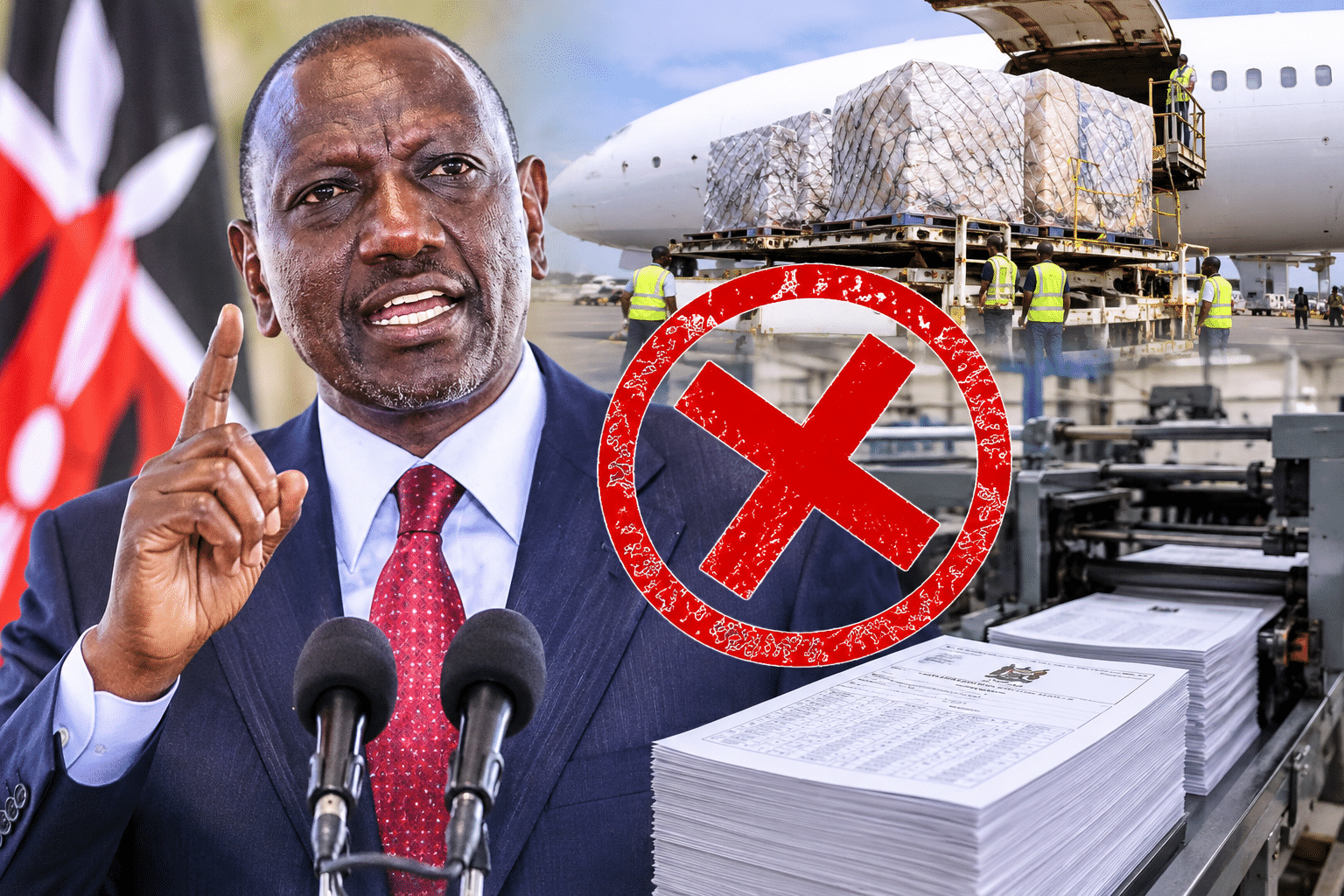
President William Ruto told Parliament that Kenya printed its national examination papers locally for the first time in 65 years, saving the country close to Sh1.5 billion. Available records show that claim is not accurate.
In his State of the Nation Address on 18 November 2026, Ruto said the 2026 papers for the Kenya Primary School Education Assessment, Kenya Junior School Education Assessment and Kenya Certificate of Secondary Education were produced inside the country.
He linked the change to a direct challenge he posed to education officials: if Kenya can print its own currency, why not examination papers? He stated that the shift had removed nearly one and a half billion shillings that would otherwise have gone to foreign printers.
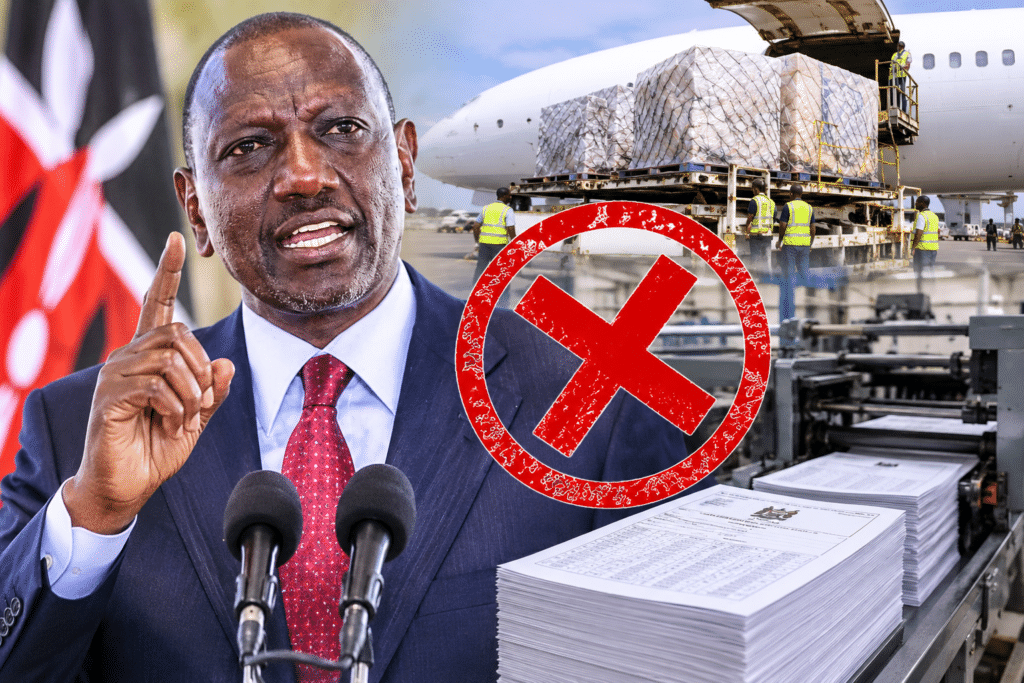
Security and logistics records from early October tell a different story. On 3 October 2026, a cargo flight arriving from Athens, Greece, delivered 71.3 tonnes of printed examination materials to Jomo Kenyatta International Airport. The consignment was received under General Service Unit escort and moved for secure storage.
The shipment occurred weeks before the main examination period and well before the President’s address.
The volume of material is consistent with the scale of papers required for more than a million KCSE candidates alone.
Earlier in the year, ministry officials had indicated that funding for specialised local printing equipment was still being allocated in the 2026/27 budget, with full domestic production of secure materials described as a future step rather than a completed shift for the current cycle.
No public breakdown has been released showing the previous foreign printing costs, the actual local expenditure, or the precise calculation behind the Sh1.5 billion figure. Procurement details surrounding the 2026 examination materials remain classified.

The historical practice of printing Kenya’s national exams abroad stretches back decades and was long justified on security grounds. The documented arrival of large quantities of printed materials from overseas in October 2026 directly undercuts the assertion that the papers were printed in Kenya for the first time in 65 years.
The claim, as presented in Parliament, is therefore false.